
A Practical Guide to Building Your Brand and Growing Your Business
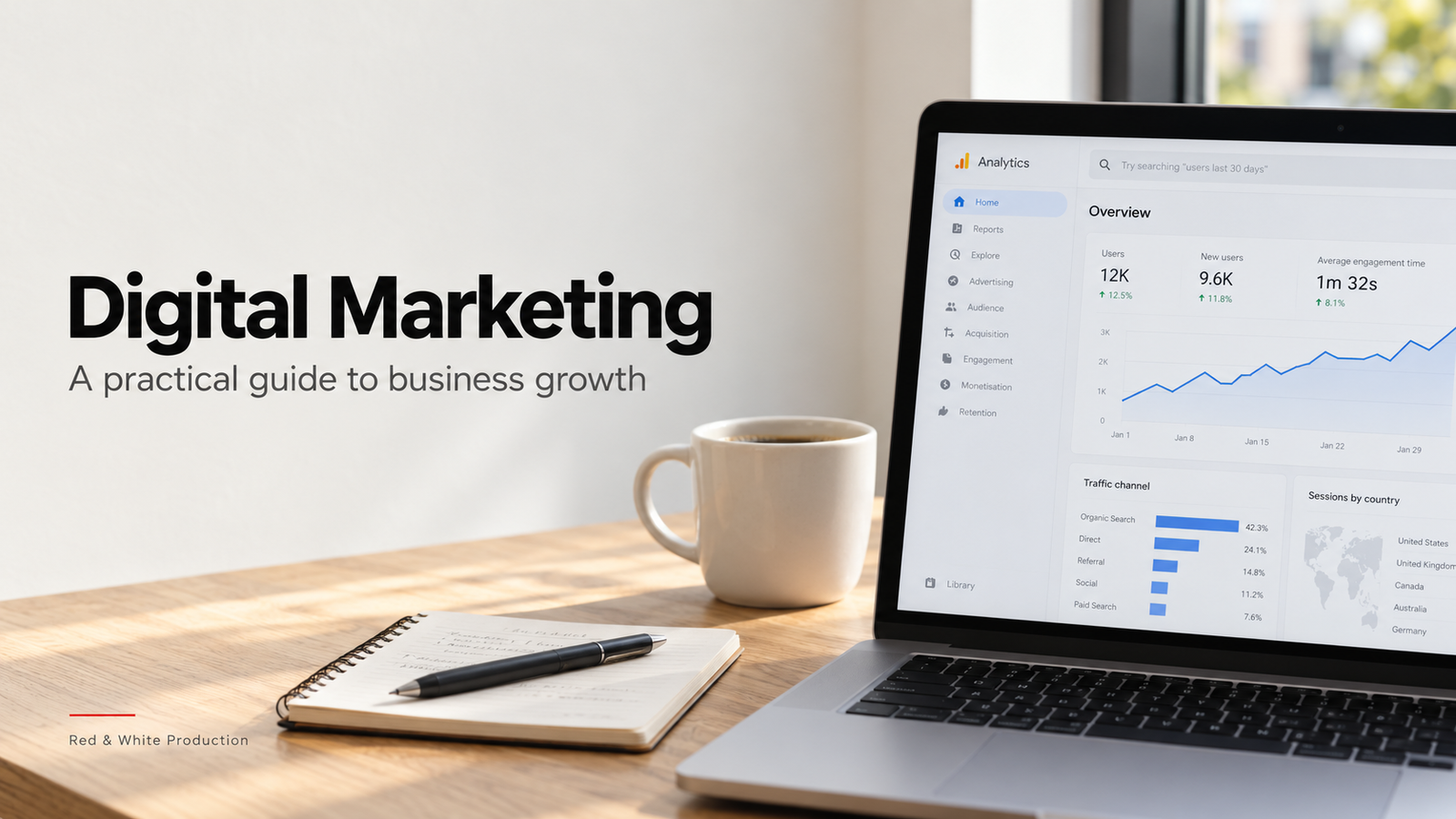
A potential customer hears about your business from a friend. Before contacting you, they search your name, visit your website and check your social media profiles. Within a few minutes, they form an opinion about your services, professionalism and credibility.
That journey shows why digital marketing matters. Your online presence often becomes your first conversation with a customer, even when nobody from your team is involved.
However, simply having a website or posting regularly does not create a successful marketing strategy. Your message, content, customer experience and follow-up process need to work together.
For a small business, an established company or a growing service brand, the objective is similar: reach relevant people, earn their confidence and make the next step easy.
This guide explains the main digital marketing channels, how to build a practical strategy and how to measure progress through business outcomes.
What Is Digital Marketing?
Digital marketing is the use of online channels to promote a business, communicate its value and attract customers. These channels include search engines, websites, social media, email, online advertising and video platforms.
A digital marketing strategy connects those channels to a specific business goal. That goal might be generating enquiries, selling products, increasing bookings or encouraging existing customers to return.
Consider a hotel. A guest might discover it through search, review its room photographs on Instagram, compare facilities on its website and contact reception to confirm availability.
Each interaction contributes to the booking decision. Marketing becomes more effective when the information remains clear and consistent throughout that journey.
The same principle applies to agencies, retailers, real estate businesses and professional service providers. Customers need to understand what you offer, why it matters and how to proceed.
Why Digital Marketing Matters for Business Growth
Customers have more opportunities to research businesses and compare their options. A weak online presence can create uncertainty, even when the actual service is excellent.
Effective digital marketing helps close that gap by making your expertise and offer easier to understand.
Reach People Who Need Your Services
Search engines and advertising can connect your business with people expressing relevant needs. A person searching for a video production company already has a different level of interest from someone casually scrolling through entertainment content.
Understanding that difference helps you choose appropriate messages and channels.
Build Confidence Before the First Enquiry
Useful articles, clear service descriptions, genuine customer feedback and relevant portfolio examples help people evaluate your business.
When a visitor understands your process and sees evidence of your work, the initial conversation can become more focused.
Learn From Customer Behaviour
Digital channels provide information about how people discover and interact with your business. You can observe which pages attract attention, which campaigns generate enquiries and where visitors leave.
These insights help you improve decisions. Their value depends on accurate tracking and interpreting the numbers in context.
Start With a Clear Digital Marketing Strategy
Many businesses start by choosing a platform. They decide to run advertisements, publish reels or write blogs before defining what those activities should achieve.
A stronger starting point is the business objective.
For example, “increase awareness” is broad. “Generate qualified consultation enquiries for our website development service” gives your team a clearer direction.
Your strategy should answer five questions:
- Who are we trying to reach?
- What problem are they trying to solve?
- What makes our offer relevant?
- Which channels support their decision process?
- What action should they take next?
The answers influence your content, advertising, website structure and reporting.
A useful strategy also recognises your capacity. If your team cannot consistently maintain five channels, start with fewer and give each one a clear purpose.
Understand Your Audience and Their Buying Journey
An audience description should go beyond age, location and occupation. Those details can help, but they rarely explain the full buying decision.
Explore the questions customers ask before choosing a provider. What concerns delay their decision? What information reassures them? What alternatives do they compare?
For a website development client, concerns might include project cost, delivery time, mobile usability and ongoing support.
For a property buyer, the questions could involve ownership documents, payment terms, construction progress and possession arrangements.
Use real conversations, enquiry forms, sales feedback and customer interviews to identify these patterns.
Then organise content around three stages: discovering the problem, evaluating possible solutions and choosing a provider.
Someone learning about branding needs educational guidance. Someone comparing agencies needs examples, process details and a clear way to request a proposal.
Build a Website That Supports Customer Decisions
Your website should help visitors understand your business and take action. Attractive visuals are useful, but clarity determines whether people can navigate the experience.
The opening section should explain what you do, who you help and what the visitor can do next.
A headline such as “Creative Solutions for Everyone” leaves important questions unanswered. A more specific statement can identify your services and their purpose.
Create dedicated pages for important services. Give each page enough detail to explain the problem, your approach, relevant deliverables and the next step.
Include authentic portfolio work, accurate contact information and a simple enquiry process.
Check the experience on mobile. Visitors should be able to read headings, view images and submit forms without struggling.
A website also needs ongoing maintenance. Broken links, outdated offers and forms that fail quietly can undermine otherwise effective campaigns.
How Search Engine Optimisation Supports Digital Marketing
Search engine optimisation, or SEO, helps search engines discover and understand your website while improving its usefulness for visitors.
SEO involves content, website structure and technical accessibility. It works best when pages answer a genuine need rather than repeatedly inserting a target phrase.
Google recommends creating helpful, reliable content primarily for people. It also states that there is no preferred word count that automatically makes a page successful. The appropriate length depends on what the reader needs to understand.
Match Content to Search Intent
Search intent describes what someone wants to accomplish through a query.
A person searching “what is digital marketing” likely needs an explanation. Someone searching “digital marketing agency in Lahore” may be comparing service providers.
These searches deserve different pages. An educational article should explain the topic clearly. A service page should describe the offer, show relevant evidence and make contact straightforward.
Make Pages Easy to Understand
Use descriptive titles, a clear main heading and logically arranged sections. Include related terms where they fit naturally.
Link to relevant pages so visitors can continue their research. Google’s SEO guidance also highlights the role of links in discovering pages and understanding their relationships.
Avoid treating an SEO plugin score as the final objective. A well-scored page still needs to satisfy its reader.
Use Local Marketing to Reach Nearby Customers
For businesses serving a particular area, location can strongly influence the customer’s decision.
A hotel guest may need accommodation near a hospital or event venue. A production client may prefer a team that can film at their office.
Your website should explain where you operate and provide accurate details about the services available there.
Use genuine local examples when they help the reader. A project completed in Lahore can demonstrate practical experience, provided the description reflects actual work.
Keep business details consistent across your website and relevant listings. Where you maintain a business profile, review its contact information, hours and photographs.
Avoid publishing numerous nearly identical location pages with only the city name changed. Each page should provide useful information specific to the audience it serves.
Create Content That Answers Real Questions
Content marketing helps customers understand a topic, assess their options and recognise your expertise.
A useful content plan begins with recurring questions. Ask your sales team what customers regularly misunderstand. Review the information people request before approving a project.
Turn those questions into articles, videos, comparison guides or frequently asked questions.
A production agency could explain how to prepare for a filming day. A design team could show what belongs in a brand identity package. A hotel could explain room facilities and booking arrangements.
Each piece should have a defined purpose. Some content attracts new visitors, while other content helps an interested prospect make a decision.
Add practical details that come from experience. Explain the process, show examples and acknowledge relevant limitations.
Publishing fewer useful pieces consistently can be more manageable than producing large quantities of repetitive material.
Give Social Media a Clear Role
Social media marketing can introduce your business, demonstrate your work and maintain relationships with potential customers.
However, a busy posting schedule does not necessarily mean your marketing is effective.
Choose content themes that support customer understanding. These might include educational advice, project examples, behind-the-scenes footage, customer questions and service explanations.
For a creative agency, a finished video can show quality. A breakdown of the brief, filming approach and editing decisions can explain the thinking behind that quality.
Use captions that add context instead of repeating what is visible. State the purpose of the project and the problem it addressed.
Respond to relevant comments and enquiries promptly. The experience after someone contacts you is part of the customer journey.
Judge performance according to each post’s purpose. Reach may matter for awareness, while relevant enquiries matter more for a service campaign.
Make Video Content Useful and Purposeful
Video can show products, explain services and help audiences become familiar with the people behind a business.
Its effectiveness depends on the message and execution. Professional equipment alone cannot compensate for an unclear idea.
Before filming, decide who the video serves, what they should understand and what action makes sense afterwards.
A property walkthrough should help viewers assess the property. That may require information about the layout, surroundings and features alongside attractive footage.
A service introduction should explain the customer problem and your approach. A customer story should use accurate details and obtain appropriate permission.
Pay attention to sound, lighting, framing and pacing. Add captions where they improve accessibility and comprehension.
Plan distribution before production. A website explanation, a vertical social clip and an advertisement may require different edits from the same filming session.
Use Paid Advertising With a Defined Offer
Paid advertising can help your business reach selected audiences and test messages. It needs a clear offer and a suitable destination.
Before launching, check that the landing page matches the advertisement. If an advertisement promises a specific service, visitors should arrive on a page explaining that service.
Sending every campaign to a general homepage can make people work harder to find the information they expected.
Start with a budget you can evaluate responsibly. Test a limited number of meaningful variations rather than changing everything simultaneously.
Compare the quality of enquiries, not simply their quantity. A low-cost lead may still be unsuitable for your service.
Review the follow-up process as well. If enquiries remain unanswered, increasing advertising spend may amplify an operational problem.
Use campaign findings to improve your offer, creative work and landing page together.
Build Relationships Through Email Marketing
Email marketing gives businesses a way to communicate with people who have chosen to hear from them.
It can support education, onboarding, product updates and customer retention.
For example, an agency newsletter might share a useful marketing lesson, a recent project breakdown and a relevant service update.
Organise messages around what subscribers need. A new prospect may benefit from introductory guidance, while an existing client may prefer practical maintenance advice.
Write clear subject lines that accurately describe the message. Keep the email focused and make its next step easy to understand.
Use consent-based mailing lists and honour unsubscribe requests. Purchased lists can introduce people who have no meaningful interest in your business.
Measure responses in context. Clicks, replies and resulting enquiries can help you assess whether the communication provides value.
Improve the Journey From Visitor to Customer
Conversion rate optimisation means improving the experience so more relevant visitors complete a useful action.
That action might be requesting a quote, booking a room or submitting a consultation form.
Start by looking for friction. Is the offer clear? Is the button easy to find? Does the form request unnecessary information? Does the page answer the questions people ask before contacting you?
Make one meaningful change at a time where possible. This makes its effect easier to interpret.
Test forms, phone links and mobile layouts yourself. A small technical issue can prevent a visitor from taking the next step.
Be careful with intrusive popups and competing buttons. Give the main action enough prominence without overwhelming the page.
Conversion improvements should help people make informed decisions, not pressure them through misleading urgency.
Measure Business Outcomes, Not Just Activity
A report showing impressions, followers and website visits can describe activity. It does not necessarily explain business progress.
Connect your reporting to the original objective.
For a service business, useful measures include qualified enquiries, booked consultations, proposals sent and customers acquired.
For a hotel, bookings and enquiry-to-booking progress may be more relevant. For an online store, completed purchases and order value may matter.
In Google Analytics 4, important interactions can be marked as key events. A configured lead-generation event can help measure meaningful website actions. Tracking still needs to be checked against actual submissions and business records.
Treat a contact-button click differently from a confirmed lead. Clicking a WhatsApp link does not prove that someone sent a message.
Combine website data with sales feedback to understand both volume and quality.
Set a Budget Your Business Can Sustain
A digital marketing budget should reflect your objectives, resources and ability to serve additional customers.
Include more than advertisement spend. Content production, website improvements, software, campaign management and reporting also require time or money.
Identify the most important bottleneck first. A business with poor visibility may need a different investment from one receiving traffic but few enquiries.
Separate ongoing work from short experiments. This helps you avoid committing the entire budget before learning which approach produces useful results.
Review performance regularly, but avoid judging every channel on the same timeline. An advertisement test and a developing content library serve different purposes.
Increase investment when there is evidence that the process works and your team can handle the resulting demand.
Avoid Common Digital Marketing Mistakes
Several problems repeatedly weaken otherwise promising campaigns.
The first is unclear positioning. If customers cannot understand what makes your offer relevant, polished graphics will have limited influence.
Another is inconsistent information. Different prices, outdated service descriptions and conflicting contact details create confusion.
Businesses also lose opportunities through weak follow-up. Marketing can generate interest, but somebody needs to answer questions and guide the next step.
Copying competitors without understanding their audience is another mistake. Their content may reflect goals or resources different from yours.
Finally, exaggerated claims can damage credibility. Publish results you can support, explain their context and avoid implying that every client will receive identical outcomes.
Reliable marketing depends on realistic promises and a customer experience that delivers on them.
A Practical 90-Day Digital Marketing Plan
A simple phased plan can make the work easier to manage.
Days 1–30: Establish the Foundation
Review your website, existing content and enquiry process. Define one primary objective and identify the audience most relevant to it.
Check your service descriptions, contact details, mobile experience and measurement setup.
Choose a small number of content themes based on actual customer questions.
Days 31–60: Publish and Test
Create useful articles, project examples and supporting social content. Launch a focused advertising test if the offer and landing page are ready.
Record incoming enquiries and ask the sales team about their relevance.
Keep notes on changes so you can connect results to decisions.
Days 61–90: Review and Improve
Compare outcomes with the original goal. Identify content that assists useful conversations and campaigns that attract suitable prospects.
Improve weak pages, refine messages and adjust spending carefully.
Use the findings to plan the next quarter rather than repeating the same activity automatically.
Frequently Asked Questions About Digital Marketing
What is the difference between digital marketing and SEO?
Digital marketing includes multiple online channels, such as social media, advertising, email and content. SEO is one part of that wider approach, focused on organic search visibility and useful website content.
Which digital marketing channel should a small business use first?
Start with the channel that fits your customer’s behaviour and your business objective. A clear website and a reliable enquiry process provide a useful foundation before expanding campaigns.
How long does digital marketing take to produce results?
There is no universal timeline. Results depend on the offer, competition, channel, budget and starting position. Set review milestones and evaluate progress against meaningful outcomes.
Do businesses need both organic content and paid advertising?
They can complement each other. Organic content supports ongoing discovery and customer education, while paid advertising can provide targeted distribution and structured testing. The right balance depends on your resources.
How often should a business publish content?
Choose a schedule you can maintain without reducing quality. Consistency helps your workflow, but each piece should answer a relevant question or support a defined objective.
Build a Digital Presence That Supports Real Growth
Successful digital marketing connects clear positioning, useful content, a practical website and a dependable customer experience.
Each channel should contribute to that system. Search helps people discover you. Content helps them understand your expertise. Your website explains the offer. Follow-up turns interest into a productive conversation.
Start by identifying where customers face the most uncertainty. Improve that part of the journey, measure what changes and build from the evidence.
At Red & White Production, we bring together digital marketing, video production, branding, web development and SEO to help businesses communicate their value more clearly.
Ready to strengthen your online presence? Contact Red & White Production to discuss your goals and the next steps for your brand.